Electric Winch Buying Guide: Capacity, Voltage & Rope Type Explained
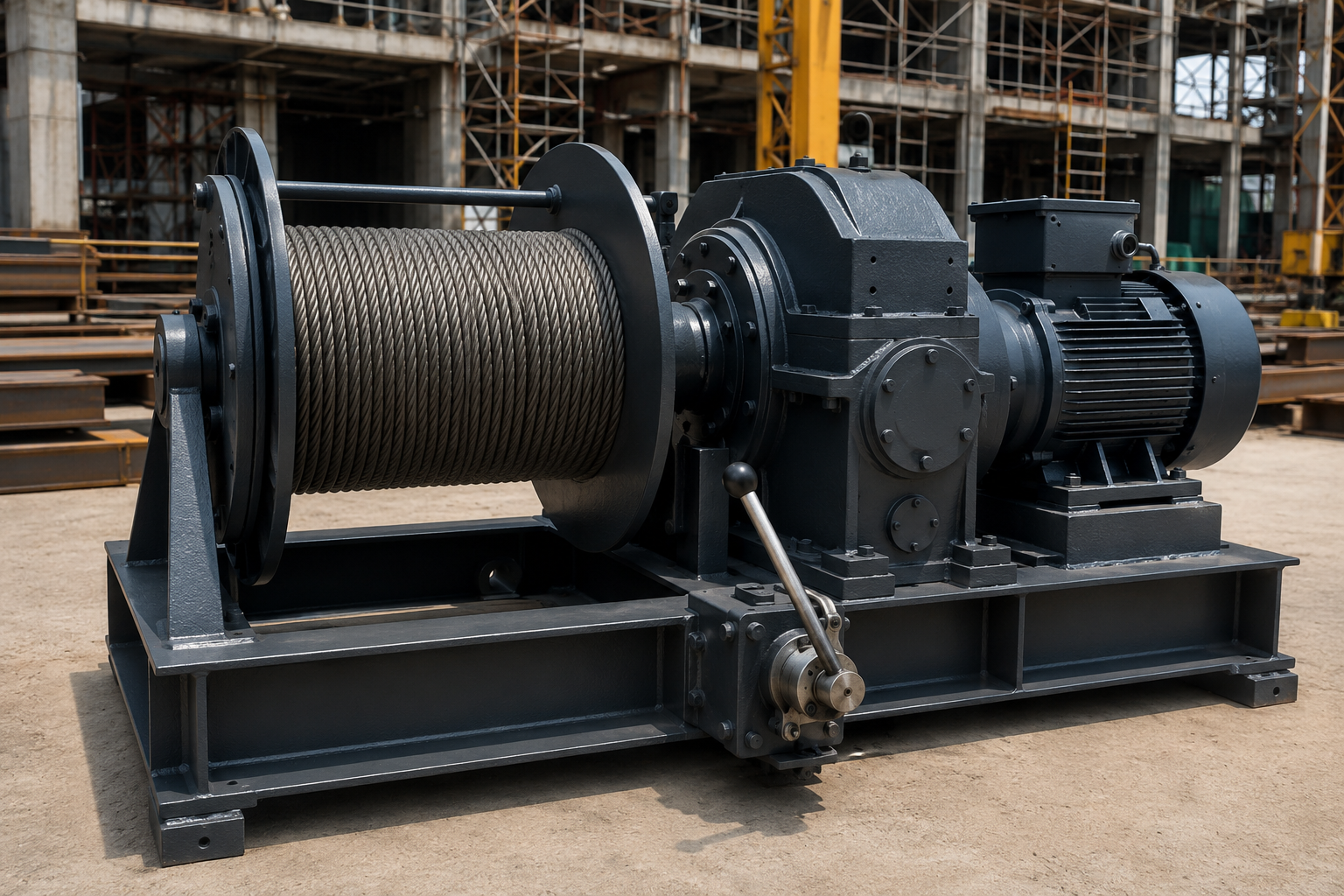
Buying the wrong electric winch for your construction site means under-powered pulls, snapped cables, and dangerous load failures. This complete buying guide covers how to select the right winch capacity, voltage, rope type, and duty cycle — and explains why refurbished ex-ship electric winches from Standard Machinery in Bhavnagar, Gujarat, offer marine-grade performance at a fraction of the new equipment price.
What Is an Electric Winch and Why Does Your Construction Site Need One?
An electric winch is a motorised device that winds a wire rope or synthetic rope onto a drum to pull, lift, or lower heavy loads. It uses an electric motor — typically three-phase or single-phase — to drive the drum through a gearbox, producing high pulling force (line pull) at controlled speed.
On construction sites, electric winches are used for pulling pipe sections, lifting structural materials in confined spaces, moving heavy formwork, dragging equipment up ramps, and tensioning anchor cables. They are faster, safer, and more controllable than manual alternatives — and far more practical than a crane for horizontal or low-angle pulls.
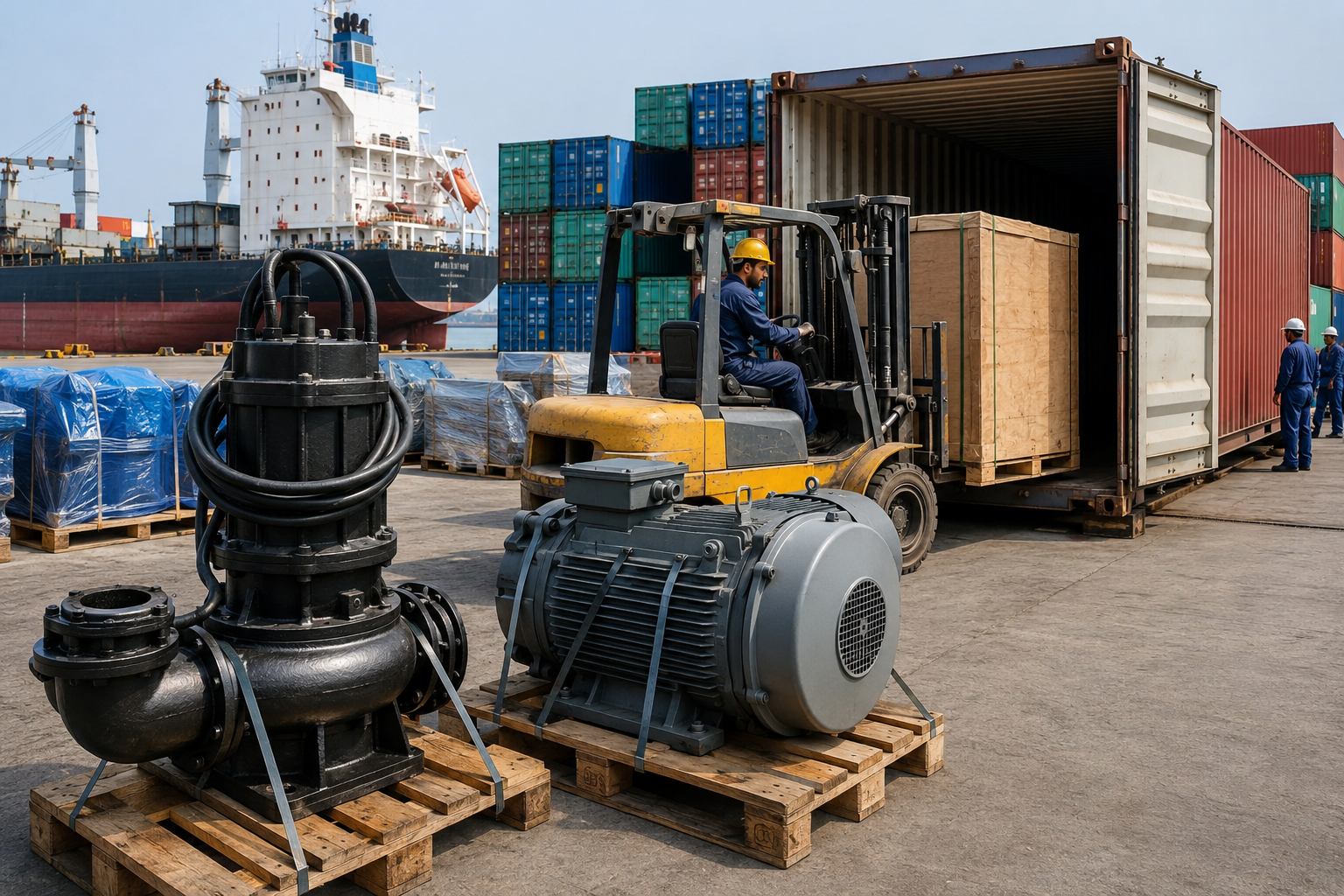
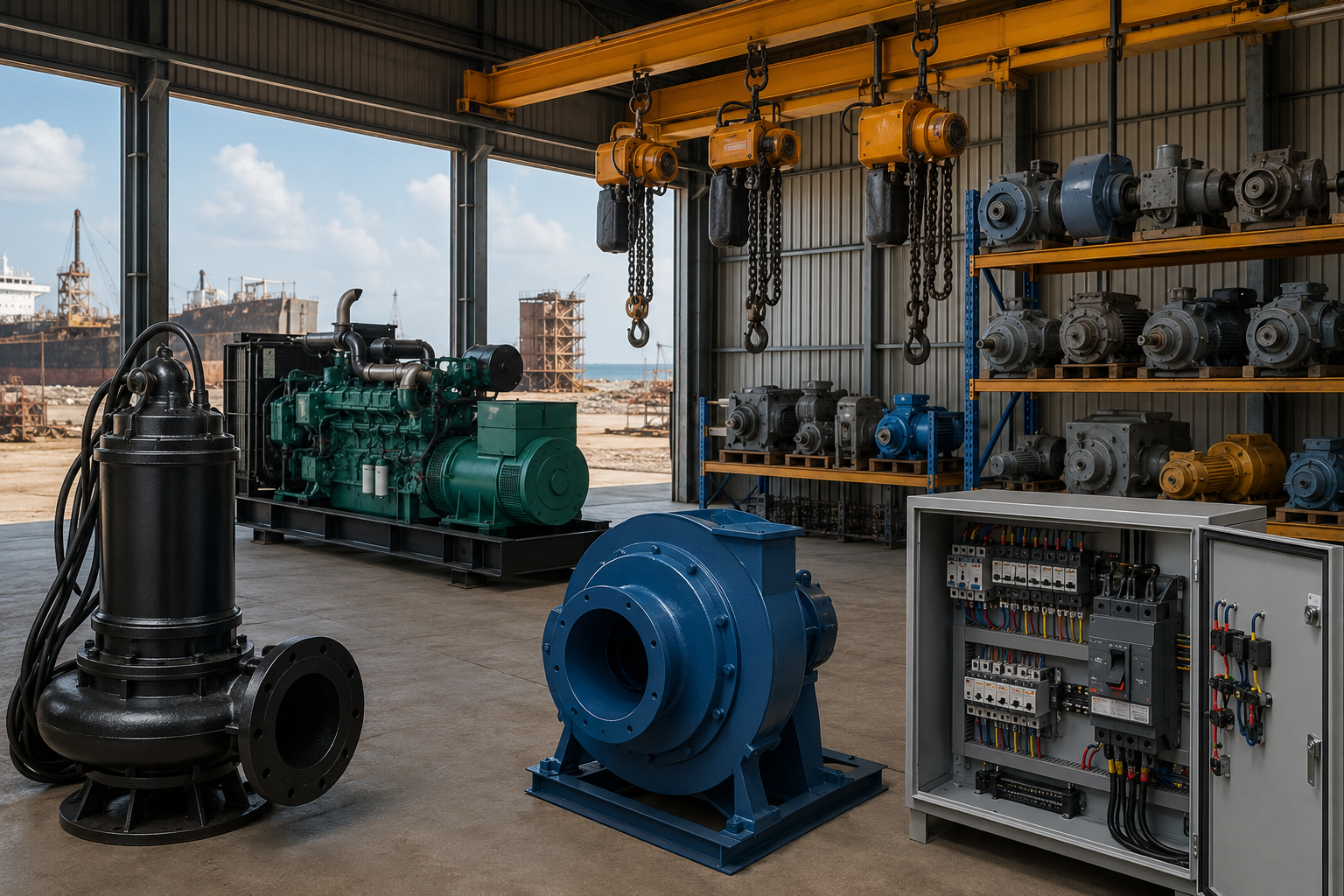
Standard Machinery, based in Bhavnagar, Gujarat, India, supplies refurbished electric winches sourced directly from Alang Ship Breaking Yard — Asia's largest ship recycling facility. Marine winches are built for the most demanding heavy-duty applications imaginable — making them ideal for construction site use at prices 40–60% below new equipment.
Step 1: Choose the Right Winch Capacity (Line Pull Rating)
The most critical specification when buying an electric winch is its line pull rating — the maximum force the winch can exert on the rope at the first layer of the drum. This is measured in tonnes (T) or kilonewtons (kN) in India.
How to Calculate the Capacity You Need
Never buy a winch rated exactly at your load weight. Real-world pulling always involves additional resistance — friction, incline, mud, and shock loading during starts and stops. Use this formula as a starting point:
Required Line Pull = Load Weight × Safety Factor (minimum 1.5× for construction, 2× for lifting)
For example: pulling a 3-tonne load horizontally on flat ground requires a minimum 4.5-tonne rated winch. Pulling the same load up a ramp increases resistance significantly — you may need a 6-tonne or higher rated unit.
Line Pull Capacity Guide for Construction Applications
|
Capacity |
Typical Load Range |
Common Construction Use |
|
1–2 Tonne |
Light loads up to 1.3T |
Small formwork, light equipment, anchor tensioning |
|
3–5 Tonne |
Medium loads 2–3.5T |
Pipe pulling, medium structural elements, ramp hauling |
|
6–10 Tonne |
Heavy loads 4–7T |
Heavy formwork, precast panels, machinery dragging |
|
12–20 Tonne |
Very heavy loads 8–13T |
Ship chandlery, large civil works, heavy plant moving |
|
25 Tonne+ |
Extreme loads 16T+ |
Marine, port, and major infrastructure applications |
Single-Layer vs Multi-Layer Line Pull
Important: a winch's rated line pull applies to the first (bottom) layer of rope on the drum. As rope builds up on the drum in additional layers, the effective pulling force decreases because the rope is wound at a larger radius. For maximum pulling force, keep the rope as short as possible and use the winch close to the load.
Step 2: Match the Voltage to Your Site Supply
Electric winches are available in several voltage configurations. Matching the winch motor voltage to your site's available power supply is essential — a mismatch means the winch either will not run or runs incorrectly, risking motor burnout.
Three-Phase 415V (Most Common for Industrial Winches in India)
The majority of industrial and construction site electric winches in India run on three-phase 415V, 50Hz supply — the standard industrial power supply across India. Three-phase motors deliver higher power density, smoother torque, and better efficiency than single-phase alternatives for the same physical size.
Most ex-ship electric winches from Standard Machinery are three-phase units — originally powered by the ship's 380V or 440V marine supply. These are fully compatible with India's 415V three-phase supply after verification of motor nameplate voltage and rewinding if required.
Single-Phase 230V (Smaller, Portable Winches)
Smaller electric winches — typically up to 1.5 tonnes — are available in single-phase 230V configuration. These are suitable for light-duty site use where only single-phase supply is available — small site offices, domestic construction, or temporary installations without three-phase supply.
DC Winches (Vehicle-Mounted and Battery Applications)
DC electric winches — typically 12V or 24V — are used on vehicles, off-road equipment, and battery-powered applications. They are not typically used in fixed industrial or construction site installations in India. Standard Machinery supplies AC three-phase winches suitable for permanent or semi-permanent site installation.
Voltage Matching Checklist
• Confirm whether your site has three-phase or single-phase supplyPower Supply:
• Verify supply voltage (415V three-phase / 230V single-phase in India)Voltage:
• Confirm supply frequency is 50Hz (standard in India)Frequency:
• Check that the winch motor nameplate matches supply voltage — or arrange rewindingMotor Nameplate:
• Ensure starter panel or DOL starter is correctly rated for the winch motor currentProtection:
Step 3: Choose the Right Rope Type for Your Application
The rope — also called the wire rope or winch line — is a critical safety component. Using the wrong rope type or a worn rope is one of the most common causes of winch failure and site accidents. There are two main rope types used with industrial electric winches.
Steel Wire Rope
Steel wire rope is the traditional and most widely used option for industrial winches in India. It is made from multiple strands of high-tensile steel wires twisted into a helical structure — giving it very high breaking strength, abrasion resistance, and durability.
Advantages of steel wire rope:
• Very high breaking load relative to diameterHigh Strength:
• Resistant to abrasion, cutting, and heatDurability:
• Low stretch — direct, positive load feelLow Elongation:
• Lower cost and widely available in IndiaCost-Effective:
Disadvantages:
• Heavy — adds to winch drum weight and handling difficultyWeight:
• Corrodes if not maintained — especially in coastal and wet environmentsCorrosion Risk:
• Dangerous when it breaks — recoils with extreme forceSnap Hazard:
Steel wire rope is the standard choice for heavy-duty construction site winches — especially for fixed installations. For coastal sites near Alang and Bhavnagar, use galvanised or stainless-coated wire rope to resist salt-air corrosion.
Synthetic (UHMWPE) Rope
Synthetic winch ropes — made from Ultra-High-Molecular-Weight Polyethylene (UHMWPE) — are increasingly used on construction and off-road applications. They are lighter than steel, float on water, and do not recoil dangerously when they snap.
Advantages of synthetic rope:
• Much lighter than steel rope of equivalent strengthLightweight:
• Does not recoil dangerously on failure — significantly saferSafer on Snap:
• Floats on water — suitable for marine and flood site applicationsFloats:
• Does not corrodeCorrosion-Free:
Disadvantages:
• More susceptible to abrasion and UV degradation than steelAbrasion Sensitivity:
• Higher cost than steel wire ropeHigher Price:
• Not suitable for high-heat environmentsHeat Sensitive:
Rope Diameter and Breaking Strength
Always match rope diameter to the drum groove size of your winch. As a general rule, the rope's minimum breaking strength (MBS) should be at least 5× the rated line pull of the winch for construction applications. Never use a rope with a lower MBS than this safety factor — especially for overhead or inclined pulling.
Step 4: Understand Duty Cycle and Motor Rating
A winch's duty cycle defines how long it can operate continuously before it needs to cool down. This is one of the most overlooked specifications when buying an electric winch — and one of the most important for site use.
• Intermittent duty (S2/S3): operates for short periods with rest intervals — suitable for occasional lifts and pullsIntermittent Duty:
• Continuous duty (S1): can operate without a defined rest period — required for applications with frequent, extended pullsContinuous Duty:
• Heavy duty: designed for high-frequency operation in demanding environments such as shipyards and portsHeavy Duty:
Marine winches from Alang are typically rated for heavy-duty or continuous-duty operation — a significant advantage over many land-based winches of equivalent line pull rating. This makes them well-suited to construction sites where the winch is in frequent use throughout the working day.
Why Standard Machinery Is the Right Choice for Electric Winches
Standard Machinery is a refurbished industrial equipment supplier based in Bhavnagar, Gujarat, India — located directly adjacent to Alang Ship Breaking Yard, Asia's largest ship recycling facility. Ships carry heavy-duty electric winches for anchor handling, mooring, cargo lashing, and deck operations — all built to withstand continuous use in the harshest marine conditions.
When these ships are decommissioned at Alang, Standard Machinery recovers their winches, inspects each unit, and carries out full refurbishment — including motor checks, gearbox inspection, drum and brake testing, and rope assessment — before supplying them to construction contractors, site engineers, and industrial buyers across India.
Why construction site buyers choose Standard Machinery for electric winches:
• Marine-grade build quality — designed for continuous heavy-duty operationHeavy-Duty Units:
• Wide capacity range — from light site winches to large industrial unitsWide Range:
• Three-phase 415V configurations available — ready for Indian site supplySite-Ready:
• 40–60% below new equipment prices — significant CAPEX savingCompetitive Price:
• Direct Alang sourcing — no intermediaries, faster availabilityDirect Source:
• Supplying Gujarat, Maharashtra, and pan-India — export to Africa, Middle East, SE AsiaWide Reach:
Browse available refurbished electric winches at standardmachinery.store or call / WhatsApp +91 88666 69293 for current stock, specifications, and pricing.
Frequently Asked Questions (FAQ)
Q: What capacity electric winch do I need for a construction site in India?
A: Apply a minimum safety factor of 1.5× your maximum load for horizontal pulling, and 2× for lifting or inclined pulling. For example, a 3-tonne load requires at least a 4.5-tonne rated winch for horizontal pulls. Always buy capacity above your current maximum load — site requirements change and heavier loads are common. Contact Standard Machinery at +91 88666 69293 for capacity recommendations based on your specific application.
Q: What voltage do electric winches use in India?
A: Most industrial electric winches used on Indian construction sites run on three-phase 415V, 50Hz supply — the standard industrial power supply in India. Smaller winches up to 1.5 tonnes may run on single-phase 230V. Standard Machinery supplies three-phase refurbished winches sourced from ships at Alang — compatible with Indian industrial supply after motor verification.
Q: Which is better for a winch — steel wire rope or synthetic rope?
A: For fixed construction site installations in India, steel wire rope is the standard choice — it offers higher abrasion resistance, lower cost, and direct load feel. Synthetic rope is preferred where weight, water exposure, or snap safety is a priority. Always use a rope with a minimum breaking strength of 5× the winch's rated line pull.
Q: Are refurbished marine winches suitable for construction site use?
A: Yes — marine winches from Alang are built for heavy-duty, continuous operation in demanding conditions. They are typically over-engineered compared to land-based construction winches of equivalent capacity. Standard Machinery fully inspects, refurbishes, and tests each winch before sale — making them reliable and cost-effective for construction site use.
Q: Where can I buy a refurbished electric winch in Gujarat?
A: Standard Machinery in Bhavnagar, Gujarat, supplies refurbished electric winches sourced from Alang Ship Breaking Yard. Contact +91 88666 69293 or visit standardmachinery.store to check current stock, specifications, and pricing.
Conclusion: Buy the Right Electric Winch — the First Time
Selecting the right electric winch for your construction site comes down to four decisions: capacity with the correct safety factor, voltage matched to your site supply, rope type suited to your environment, and duty cycle that matches your frequency of use. Get these four right and your winch will deliver years of reliable service.
For cost-effective, marine-grade refurbished electric winches ready for Indian construction site use, Standard Machinery is your specialist supplier in Bhavnagar, Gujarat. Visit standardmachinery.store or call / WhatsApp +91 88666 69293 to discuss your site requirements and get a competitive quote today.