Why Do Submersible Pumps Burn Out? Common Causes, Insulation Failures & Prevention Guide
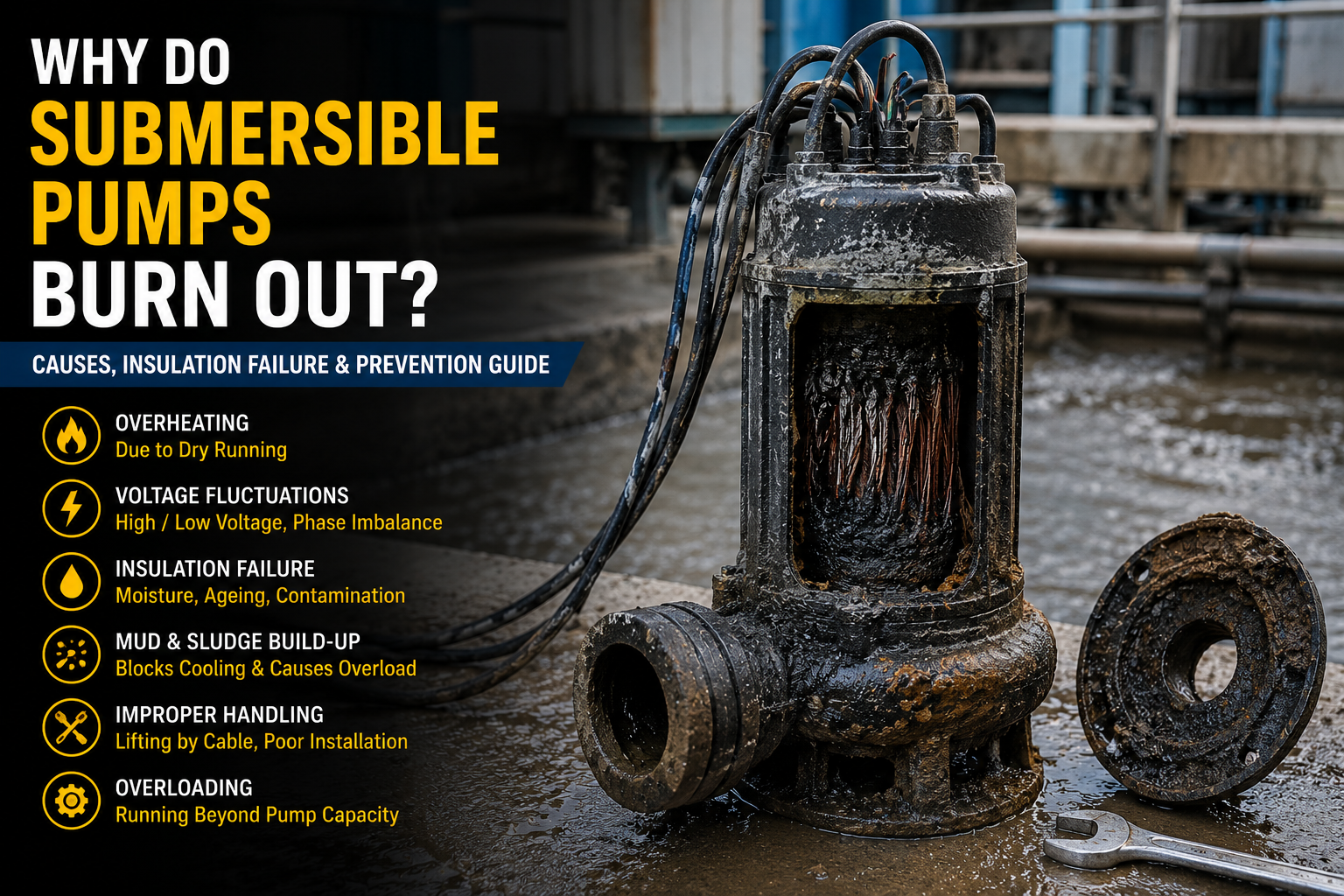
Learn why submersible pumps burn out, the most common insulation failure causes, overheating problems, voltage issues, and how to prevent sewage and borewell pump motor damage in industrial and commercial applications.
Why Do Industrial Submersible Pumps Burn Out? Common Causes & Prevention Guide
Industrial submersible pumps are widely used in sewage systems, wastewater treatment plants, construction sites, slurry handling, drainage systems, and mud pumping applications. These pumps operate in harsh environments continuously, so proper maintenance and handling are extremely important.
In many industrial sites, pumps fail not because of manufacturing defects, but because of improper usage, poor maintenance, cable damage, overheating, and insulation failure.
At Standard Machinery, industrial experts often see real-world pump failures caused by small maintenance mistakes that later result in expensive motor burnout and downtime.
What Happens When A Submersible Pump Burns Out?
When an industrial submersible pump “burns,” it usually means:
- motor winding insulation has failed,
- internal temperature became too high,
- water entered the motor chamber,
- or electrical short circuit occurred.
This damages the pump motor internally and may completely stop pump operation.
Common Reasons Why Industrial Submersible Pumps Burn Out
1. Dry Running Without Water
Submersible pumps depend on water for cooling.
When sewage pumps or mud pumps run without enough liquid:
- motor temperature increases rapidly,
- winding insulation weakens,
- internal coils overheat,
- and finally the motor burns.
This is extremely common in:
- sewage tanks,
- empty pits,
- borewell systems,
- slurry pumping applications.
2. Mud & Sludge Deposits After Usage
This is one of the most ignored real-world problems in industrial sites.
After sewage or mud pumping work is completed, many operators leave the pump dirty without proper cleaning.
Over time:
- mud becomes hard,
- sludge blocks cooling passages,
- seals get damaged,
- impeller movement becomes tight,
- corrosion starts developing.
This eventually causes:
- overheating,
- bearing damage,
- water leakage,
- insulation failure.
Important Maintenance Tip
After every sewage or mud pumping operation:
✅ clean the pump properly
✅ wash sludge deposits completely
✅ remove dirty particles from the impeller area
✅ dry and store the pump correctly
Proper cleaning significantly increases industrial pump life.
3. Lifting Pumps Using The Cable
This is another very common industrial mistake.
Many labor workers lift heavy submersible pumps directly using the electrical cable instead of the lifting hook or chain.
Because of this:
- cable joints become loose,
- insulation gets damaged,
- water enters through cable sealing,
- internal short circuits occur.
Over time, this causes motor winding failure and pump burnout.
Correct Method
Industrial submersible pumps should always be lifted using:
- lifting chain,
- handle,
- hook,
- or proper support system.
The electrical cable should never carry the full pump weight.
4. Water Leakage Inside The Motor
Industrial sewage pumps operate underwater continuously. If seals become damaged because of mud, corrosion, or rough handling, water can enter the motor chamber.
This causes:
- insulation breakdown,
- winding short circuit,
- bearing rusting,
- internal motor damage.
Seal leakage is one of the biggest causes of industrial submersible pump failure.
5. Voltage Fluctuation & Phase Problems
Improper electrical supply is extremely dangerous for industrial pumps.
Common Electrical Problems
- low voltage,
- high voltage,
- phase imbalance,
- loose connections,
- overload conditions.
These issues increase motor temperature and reduce insulation life rapidly.
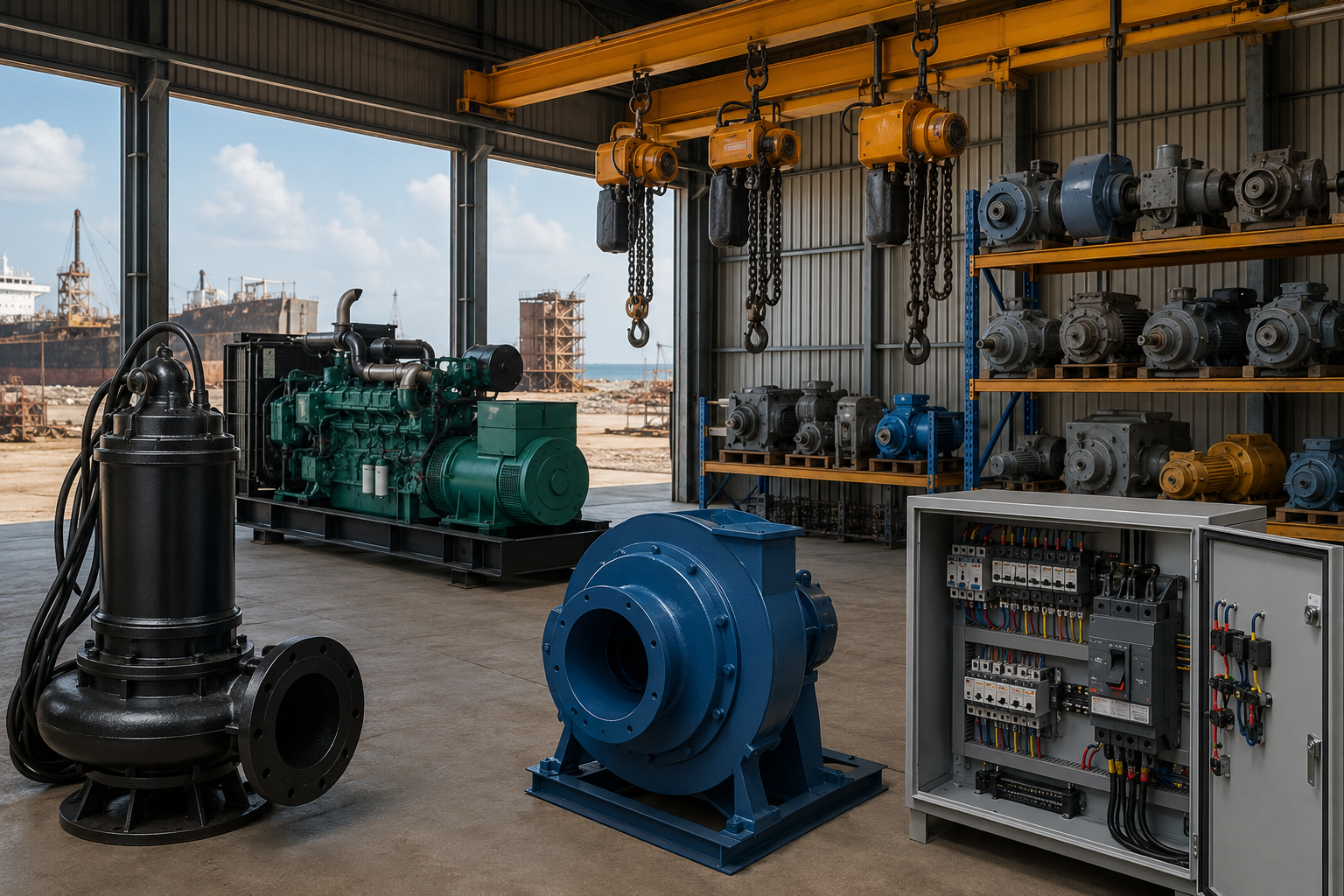
Using proper protection systems such as:
- MCCB,
- overload relay,
- phase preventer,
- motor starter panel,
- control panel
helps improve pump reliability.
At Standard Machinery, industrial electrical protection solutions are recommended for heavy-duty pump installations and continuous industrial operation.
6. Continuous Overloading
Many industrial pumps are forced to operate beyond their designed capacity.
This may happen because of:
- blocked pipeline,
- excessive sludge,
- wrong pump selection,
- high discharge head,
- oversized solid particles.
Continuous overload creates excessive heat inside the motor winding and eventually damages insulation.
7. Poor Quality Cable & Jointing
In sewage and construction applications, cable quality is extremely important.
Low-quality cables or poor joints may cause:
- voltage drop,
- overheating,
- current leakage,
- insulation melting,
- motor burnout.
Industrial-grade flexible copper cables are always recommended for heavy-duty submersible pump applications.
Important Tips To Increase Industrial Pump Life
Best Maintenance Practices
✅ Clean sewage and mud pumps after every use
✅ Never lift pumps using electrical cable
✅ Check insulation resistance regularly
✅ Use proper overload protection
✅ Maintain stable voltage supply
✅ Service seals and bearings periodically
✅ Use industrial-grade cables and control panels
✅ Avoid dry running conditions
✅ Store pumps properly after usage
Proper preventive maintenance helps reduce expensive industrial downtime.
Why Industrial-Grade Pumps Matter
Heavy-duty industrial submersible pumps are designed for:
- continuous operation,
- wastewater handling,
- sludge transfer,
- mud pumping,
- sewage applications,
- corrosive environments.
Industrial-grade pumps provide:
- stronger insulation,
- better cooling,
- durable seals,
- improved corrosion resistance,
- long operational life.
This is especially important in factories, wastewater plants, construction sites, municipal drainage systems, and industrial sewage applications.
Final Thoughts
Industrial submersible pump burnout is usually caused by overheating, insulation failure, mud blockage, poor maintenance, cable damage, dry running, or voltage problems.
In real industrial environments, small handling mistakes often become major pump failures later.
Proper cleaning, correct lifting methods, electrical protection, and preventive maintenance can significantly increase pump life and reduce operational costs.
As industrial wastewater and sewage handling systems continue growing globally, industries are increasingly focusing on reliable and long-lasting submersible pumping solutions.
For industrial pumps, electrical protection products, sewage handling systems, and heavy-duty industrial equipment, Standard Machinery continues supporting industries with reliable industrial solutions and practical field expertise.